A Slow Blink: A Consent-Led Approach to Your Child’s First Eye Test
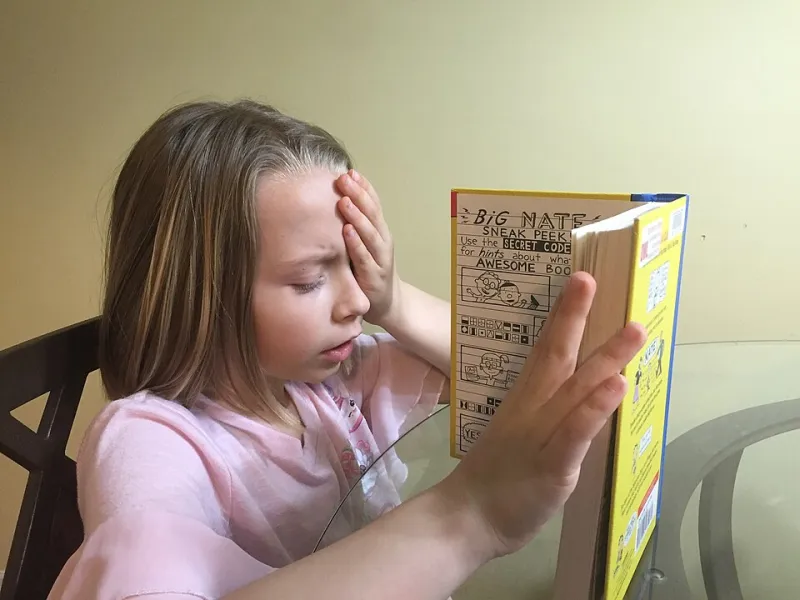
Photo: NIH Image Gallery from Bethesda, Maryland, USA, Public domain, via Wikimedia Commons
An eye test is one of those appointments that looks small on paper and feels considerably larger in the room. There is a chair that moves, a dark cabinet of lenses, a light directed towards the face and an adult sitting unusually close. For an autistic child, the unfamiliarity is not a side issue; it is the main event. The aim of a first visit is therefore not to complete every measurement, but to begin a relationship with optometry that can grow over time.
Begin with the Ordinary, Not the Clinical
Long before the appointment, bring the ideas of an eye check into ordinary family life. Practise covering one eye with a hand, then with a piece of card, taking turns and naming which eye is covered. Play a simple looking game: hold up two similar pictures at slightly different distances and ask which one is easier to see. This rehearses the language an optometrist may use without making the living room feel like a clinic.
Use neutral, concrete words. “Eye check” often lands more gently than “test”, and “the optometrist will look at your eyes with a light” is clearer than “they will examine you”. If your child likes visual schedules, add the visit as a single picture on the day. If they prefer to know the sequence, describe three steps only: we go in, we sit in the big chair, we say hello to the lights. Too much detail can become its own sensory load.
Choose a Practitioner Who Will Go Slowly
In the UK, community optometrists on the high street are the usual first port of call, and you do not need a GP referral for a routine sight test. NHS sight tests are free for children under 16, and for young people under 19 in full-time education. Many practices in and around West OK will see children routinely, but not all are equally experienced in adapting an appointment for an autistic child.
It is entirely reasonable to telephone ahead and ask a few practical questions. Does the practice offer a quiet appointment time, perhaps first thing or during a school session? Can the lights be dimmed? Is there a pre-visit available, where your child can sit in the chair and meet the equipment without any testing? Can you send a short profile in advance? A practice that answers these questions thoughtfully is often a better sign than one that promises a full test in fifteen minutes.
If your child has an education, health and care plan or a hospital eye clinic appointment, mention this when booking. Some community practices can offer longer appointments or home visits for children with complex needs; availability varies, so it is worth asking directly rather than assuming.
The Room, the Chair and the Stop Signal
Before anything begins, agree a stop signal. This can be a hand raised, a card placed on the arm of the chair, or a single word such as “pause”. Tell the optometrist at the start of the appointment that this signal means everything stops immediately, without negotiation. A stop signal is not a threat to the test; it is the condition that makes the test possible.
Ask the optometrist to narrate each step before doing it: “I am going to shine a little light, then I will ask you to look at the picture of the boat.” Where safe, let your child touch the occluder, the reading card or the frame of the chair. Familiarity reduces the sense of being acted upon. Bring a comfort item, ear defenders if noise is difficult, and a preferred snack for afterwards. Perfume and hand sanitiser can be sensory triggers, so a quiet word at reception may help.
Some equipment sounds worse than it is. The “puff of air” test is not routinely used for young children in many community practices, and other measurements can often be deferred. If a particular instrument becomes a sticking point, ask whether it is essential for this visit or whether it can wait. A good practitioner will distinguish between “needed today” and “needed eventually”.
A Partial Appointment Is Still a Good Appointment
Plan for a short visit. Fifteen minutes of calm cooperation is more useful than forty minutes of distress. If your child manages the chair, the light and one looking task, that is a successful first appointment. If they manage only the waiting room and a hello, that is also information, and it is not a failure. Leave before the point of overwhelm, thank the practitioner, and rebook.
It can help to agree a pre-planned exit with the optometrist at the start: “If we stop early, we will come back another day.” This removes the feeling that the appointment has been lost. Afterwards, write a brief note of what worked and what did not, and ask for it to be added to your child’s record. The next visit then begins with knowledge rather than guesswork.
After the Appointment
Praise specifically rather than generally: “You kept your hand up when you needed a pause” is more useful than “well done”. Share the debrief with the practice if you are comfortable doing so. Over time, these small pieces of shared knowledge build an optometry relationship that respects your child’s consent, senses and pace. The first eye test does not need to be complete. It needs to be safe enough to return to.